- Urooj Fatimah

- Sep 14, 2024
- 20 minutes read
- 822 Views
In this blog we will learn about transcription factors, their types, functions, and their key role in regulating gene expression. Discover methods and tools for predicting transcription factors and understanding their influence on gene activity.

- Muhammad Hasnain Sheraz

- Aug 31, 2024
- 20 minutes read
- 575 Views
In this blog, I offer a detailed, step-by-step guide on using bioinformatics tools for multiepitope vaccine design. Covering everything from antigen selection to epitope validation, this resource is tailored to help researchers efficiently design vaccines that target multiple epitopes, ensuring a strong immune response.
- Muhammad Abdullah Tanveer

- Aug 30, 2024
- 5 minutes read
- 461 Views
This blog covers the basics of Python and R along with difference between these languages. If you’re stepping into the world of data science, you’ve likely come across two powerhouse programming languages: Python is suitable for machine learning while R is better for statistical analysis.
- Urooj Fatimah
- Aug 25, 2024
- 20 minutes read
- 758 Views
This blog explains DNA microarrays, their role in gene expression analysis, and how to perform and analyze the data. It covers data acquisition from GEO and guides readers through data analysis using Excel, making bioinformatics accessible to all.
- Urooj Fatimah
- Aug 15, 2024
- 15 minutes read
- 5,223 Views
AlphaFold2 and AlphaFold3 are groundbreaking tools in protein structure prediction. This blog offers a straightforward guide to using these technologies, highlighting their practical applications in bioinformatics. You will learn how to leverage AlphaFold for accurate protein modeling, making complex tasks simpler and more accurate.
- Urooj Fatimah
- Aug 14, 2024
- 30 minutes read
- 8,218 Views
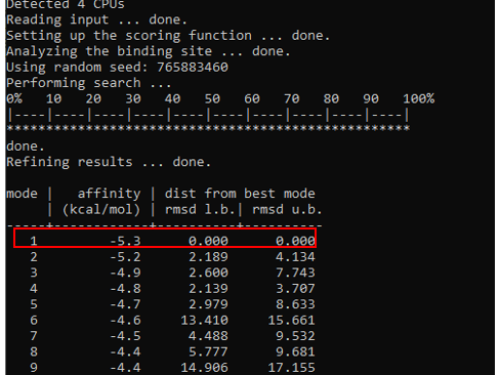
In this blog, we will explore how to use AutoDock Vina for both standalone and automated molecular docking. Discover practical steps and tips for setting up and executing docking simulations with AutoDock Vina, enhancing your ability to perform accurate and efficient molecular docking.


BioInfoQuant offers comprehensive bioinformatics and computational biology solutions, including molecular dynamics simulations, computer-aided drug design, vaccine design, and RNA-Seq and NGS data analysis. We provide specialized training, consultancy, and internship programs, utilizing Linux, Python, R, C++, Perl, Java, and JavaScript to drive innovation and excellence in research and development